Showing posts with label cryptography. Show all posts

Monday, March 09, 2026

Enigma Sim on ww2crypto.online by Brian Neal

In 2012, Brian Neal successfully completed our Enigma Challenge. Since then, he was hooked on crypto machines and started that same year his own Py-Enigma project which found its way to GitHub. Last December, Brian created the website www.2crypto.online to make his browser-based Enigma simulation available to everyone. He currently works on the U.S. M-209, the Japanese PURPLE machine, and plans to develop more crypto machines to run in your browser.

More information on Brian Neal's project:

ww2crypto.online Enigma
Py Enigma Project Page
Python Py-Enigma’s documentation
Enigma simulator on GitHub

Keep an eye on https://ww2crypto.online as several simulations will be added in the coming months.

Tuesday, February 18, 2025

20 Years of Cryptologic Challenges

This year will mark the 21st anniversary of our Enigma simulator and the 20th year of cryptologic challenges. It all started in early 2006 with the Enigma Challenge to decrypt ten messages. Although the challenge was a one-time event, the feedback encouraged us to continue the challenge. The original 2006 results are included in the all-time Table of Honor of the currently running challenge.

The Enigma machine,  Crypto Box and TSEC/KL-7 ADONIS

In the following years, we introduced four more challenges, each with its own Table of Honor that lists all participants. The crypto machine simulations in the Enigma Challenge and Operation Tinker Bell work exactly like the real machines, making for authentic experience.

Some challenge statistics (updated 20 April 2026)

Enigma Challenge (est. 2006)

Currently, 366 participants from 46 countries solved 2,471 messages. This challenge is quite accessible and no expert knowledge on cryptologic techniques is required. This challenge serves as an introduction to codebreaking. Most participants get quite far with logical thinking, patience and some perseverance, with 55% of them solving eight to ten messages. Visit in English or Nederlands.

Crypto Box Challenge (est. 2007)

This transposition cipher is more difficult and 89 participants from 26 countries submitted 162 solutions. The first Crypto Box is not that difficult, but complexity increases rapidly. To this day, only 13% solved the three boxes and 87% solved one or two boxes, which is quite meritorious, given the difficulty level. Some cryptanalytic knowledge is useful but hard work also pays off. Visit in English or Nederlands.

Operation Tinker Bell (est. 2013)

This is an accessible cryptologic spy adventure set in an authentic Cold War atmosphere, focusing on secure communications between intelligence agencies and their agents and operatives in the field. No cryptologic skills are required. All authentic crypto tools, keys, and instructions are provided to solve the case. Those who complete the mission have their names engraved on the Wall of Honor. Currently, the operation has been completed by 33 participants who deciphered a total of 1,716 messages. Visit only in English

Elite Box Challenge (est. 2022)

The Elite Box is the Crypto Box on steroids. To this day, only one person managed to solve two out of the three boxes, and four participants solved one box. The first box already starts with a higher number of steps, there's one box with an unknown number of steps, and one box has an unknown type of fractionated characters, requiring more than simply shifting rows and columns. Cryptanalytic techniques are required to solve this one. Visit in English or Nederlands.

The Crow's Cryptogram (est. 2010)

Although already published in 2010, there's a good reason why the Crow's Cryptogram is the last one on our statistics list. Only encrypted with a pencil-and-paper system, this one comes with a single hint, and has 600 digits in 120 five-digit groups. The bleak statistics: only one person ever solved this cryptogram. Expertise in cryptanalytic techniques is required. Visit in English or Nederlands.

If you're in for a cryptologic adventure, enjoy the challenges!

Monday, December 16, 2024

Operation Tinker Bell has Relocated to the Website!

Operation Tinkel Bell has moved to the Cipher Machines and Cryptology website. The move offers more flexibility for HTML and maintenance, and a broader audience. It's also easier to switch from the operation to the technical and historical research on the website. If you love Cold War spy stories, secret operations, and cryptology, this is the perfect mix for many hours of excitement.

Operation Tinker Bell is a spy case that you solve using cryptography. The year is 1964 and Operation Tinker Bell takes place at the height of the Cold War. You are assigned to the operation as COMSEC officer, and your task is to decrypt the message traffic between intelligence agencies, their stations abroad and agents in the field. All required crypto tools, keys and clear instructions are provided. You get the proper training to work with the TSEC/KL-7 crypto machine, decrypt numbers station broadcasts, and use one-time pad encryption.

You experience spy tradecraft, operations behind the Iron Curtain, illegal border crossings, fake passports and safe houses. CIA transmitter sites in West Germany provide support, and the dreaded East-German Stasi and Czech StB secret police are some of your opponents. British intelligence helps to arrange clandestine meetings, the U.S. Army Security Agency provides SIGINT support and some USMLM operations don't take the rules of engagement too seriously.


Click the banner and join the operation!

The Cold War at its best, with authentic details, many historical photos, and as real as it gets. If you successfully decrypt all messages, your name is engraved in the Wall of Honor. However, this operation is no walk in the park, and failure is not an option. Read up on the operation in the briefing room, and be prepared.

Monday, July 08, 2024

A Call to Former KL-7 and KL-47 Operators

TSEC/KL-7 © Dirk Rijmenants

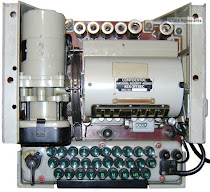
The TSEC/KL-7 crypto machine was developed by the Army Security Agency (ASA) and Armed Forces Security Agency (AFSA) under the name AFSAM-7 and introduced in 1953 by the National Security Agency (NSA) into the U.S. Army and Air Force, and later also into the CIA and FBI. The machine also served in all NATO forces, their embassies and some state departments. The U.S. Navy AFSAM-47B, later known as the TSEC/KL-47, was compatible with the KL-7. The last machines  retired in the early 1980s. It's been little over 40 years ago that the last machines left the service and time is running out to document first-hand accounts on these machines.

If you are a retired signals veteran with experience on the KL-7 or the KL-47, as operator or technician, a member of a signals association or organization, or worked in the communications section of a state department that used the KL-7, then contact us through our website to document your story. The KL-7 is fully declassified, and we're not interested in classified information, we only want to preserve the cryptologic history of these Cold War icons.

Besides the United States, the KL-7 was also used by its NATO allies Australia, Belgium, Canada, Denmark, England, France, Germany, Greece, Italy, Luxemburg, the Netherlands, Norway, New Zealand, Portugal and Turkey. Outside NATO, the KL-7 was also on loan to South Korea, South Vietnam and Taiwan. If you're a signals veteran from any of these countries, a state department or embassy in the 1950s to 1980s era, then contact us, or spread the word.

Unfortunately, time is running out to document first-hand accounts, as the people involved are age seventy or older, and memories fade. Please share this request with all signals communities that might have former KL-7 or KL-47 operators and technicians. Those who share their story retain full control over the content and how it is published.

Let's preserve cryptologic history!

Visit the U.S. TSEC/KL-7 ADONIS & POLLUX webpage to learn more about the KL-7, its development, technical details and full history, including some first-hand accounts, also shown below, to get an idea of the kind of stories we hope to document. You can contact us through the contact page on our website Cipher Machines and Cryptology.

Enjoy reading!

Thursday, June 06, 2024

Martin Gillow's Virtual Colossus and Other Machines

The Virtual Colossus
© Image Martin Gillow

The history of crypto equipment is quite fascinating, but diving into the archives, searching for historical publications, or collecting those old machines is not everyone’s cup of tea. Luckily, we have a community, dedicated to preserving the history of old crypto equipment, research the technical details, publish their history and operational use, and bring those old crypto machines back to life, either physically, which can be quite expensive, or virtually though software simulations.

Writing software that works exactly like the real crypto machine requires extensive study of the original machine, its mechanical and/or electrical properties, and many hours to write the software that reproduces the plaintext or ciphertext exactly like the original machine. However, you could take it one step further, and make a virtual three-dimensional machine where you can manipulate all components and encrypt, decrypt or break messages, just like the wartime operators.

Martin Gillow created a website with no less than ten 3D simulations. The virtual British Colossus machine is the first ever digital computer, developed in WW2 to break the German Lorenz SZ40/42 encrypted telex, of which he also created a virtual version. There’s also the virtual Enigma machine, and the Bombe that was used by the Bletchley Park codebreakers to decrypt the German Enigma messages.

Hagelin's U.S. M-209
© Image Martin Gillow
Also the British Typex machine and the U.S. M-209, developed by the renown Swedish engineer Boris Hagelin, have their 3D version. Moreover, the collection includes the ICT 1301 ”Flossie” second-generation computer, the E.R.N.I.E electronic random number generator, and the American crib dragging machine Dragon that helped to break the Lorenz messages.

Of course, the countless hours of work by Martin to research and study those machines, and write accurate 3D versions, is just enormous, and makes this 3D collection simply unaffordable… unless you just want to preserve and share the history of old crypto machines, and make the simulations available to everyone for free. A big Thank You to Martin for creating all those virtual machines, and for being part of that small community, dedicated to preserve cryptologic history.

Make sure to scroll all the way down his main page, to find all virtual 3D simulations and read the various tutorials on how to use them. Also click the relevant "find out more" buttons to learn about each machine and its history. Visit the Virtual Colossus website.
 
Highly recommended, and no better day than D-day to share Martin's work and commemorate all codebreakers.

Thursday, March 28, 2024

Crypto's Cast with Dr. Carola Dahlke as First Guest

I'm pleased to announce the first guest on our brand new Crypto's Cast. The goal is to bring interesting bite-size stories for crypto enthusiasts, but also to tickle the interest of listeners with limited or no knowledge on cryptography.
 
The Cast is a group of crypto experts, historians and collectors that will bring fascinating stories, with topics ranging from cryptologic history, its technology and science, important historical events, influenced by cryptography, renown cryptologists, cipher machines, the making and breaking of codes and crypto algorithms, crypto and privacy, to books and websites.
 
Our first guest is Dr. Carola Dahlke. She is the curator of the department of Computer Science and Cryptology at the Deutsches Museum in Munich, Germany, and expert in historical crypto equipment. There's hardly a better guest to start our podcast, as she was instrumental in documenting and preserving the Schlüsselgerät 41, a German cipher machine, far more secure than the famous Enigma, but unknown until recently.
 

Wednesday, January 03, 2024

20 Years Cipher Machines and Cryptology!

WELCOME TO 2024! 

This year, the Cipher Machines and Cryptology celebrates its 20th anniversary. It all started in the first days of 2004 with a tiny users page on a server, to share the very first version of the Enigma Simulator. Over the years, and with the help of fellow crypto enthusiasts, the website gradually grew by adding more crypto machines, their history and technical details, simulations, and several cryptologic challenges. In early 2022, the website finally moved to its own domain, and the feared drop in visitors due to the move never occurred, with thanks to the visitors, and Google.

The statistics exceeded all expectations. Meanwhile, the website received more than 4.5 million views, and not only to read about cryptology. No less than 355 participants from 46 countries entered the Enigma Challenge, the Crypto Box Challenge 84 persons from 26 countries, and Operation Tinker Bell is completed by 30 persons from 16 countries (stats updated 27 Feb 2025). A big Thank You to all those who invested time and effort in solving the various challenges, which are still open to new participants

The kind feedback in the guestbook, posted by 308 people from 52 countries, is much appreciated. Never imagined that a little project, to create a simulation of an old crypto machine, would become such a journey into cryptography. The interest in this website, and similar websites from many friends, shows that the fascinating history of cryptography continues to attract people from across the world. And the love for cryptography is exactly why the website was created!

Many thanks and best wishes for 2024, to all friends, participants and cryptography enthusiasts. See you at the website!

CIPHER MACHINES AND CRYPTOLOGY 
Historical and technical information about crypto machines,
cryptology and free software simulation

Sunday, July 23, 2023

The First Compiled History of the KL-7

TSEC/KL-7 © Dirk Rijmenants

The TSEC/KL-7 was the first rotor cipher machine to use electronics, and although the KL-7 had excellent cryptographic properties, its track record is what made this machine a true Cold War icon. My first encounter with that curious unknown machine with vacuum tubes was back in 2005 in London on the battleship HMS Belfast, displayed behind glass.

It took another six years to unravel the inner workings of this cryptologic beauty, and write the first accurate KL-7 simulator. This was only possible thanks to the release of many technical documents from the National Security Agency (NSA), through Freedom of Information Act requests (FOIA's) from Bill Neill, and published by Nick England from US Navy Radio Communications. The technical expertise from Paul Reuvers and Marc Simons from the Crypto Museum, and from George Mace, were also instrumental to develop the KL-7 simulator.

However, despite the release of some history related documents, only fragmented pieces of its development and operational use were available, and the history of the KL-7, initially named AFSAM-7, remained largely unknown to the public. In the last three years, I could connect more dots, found in the NSA's William Friedman records.

Historical records from the U.S. Army Security Agency (ASA) contained production details, planning and procurement, and later described the analysis of the KL-7's use in Vietnam. Those records were preserved by the NSA. The NATO archives revealed the use of the KL-7 by many allied countries and some of their state departments, and the technical support they received.

Although there were only unconfirmed hints that the KL-7 was also used by the CIA and FBI, some tiny bits of information provided clues on where and how to search for more information. Moreover, ASA records confirmed the procurement for those agencies. That search took long, but eventually led to a few CIA documents, multiple FBI files, and letters from FBI director J. Edgar Hoover that confirmed their own use of the KL-7, and its use by the White House, on the presidential airplane Air Force One, and several Asian countries.

The KL-7 also has its own chapters in the history of Cold War espionage, with chief warrant officer John Walker selling the machine's technical details and secret keys lists to the Soviets, but the Counter Intelligence records from the Director of National Intelligence (DNI) also detailed warrant officer Joseph Helmich's betrayal, leading to other FBI files on counterintelligence operation Hookshot to catch Helmich. His case is less known than John Walker's, but just as interesting.

Ever more pieces of information were added to the KL-7 webpage, which already contained all technical information, making it quite large. To make the KL-7 history more accessible, I decided to publish the article that I started in 2022, which also includes references to the relevant ASA, AFSA, NSA, NATO, FBI, CIA and DNI files. This way, everyone can easily find all related files for their own research.

Since my motto is "history is here to share", you're free to share or publish the below document, or parts of it, provided that proper credits are added. Why should you share it? Because its use across the world for decades, and the spy cases, make the KL-7 a true Cold War icon that deserves its place in history, but also to honor the cryptologists and engineers who developed this marvel, and the operators who served around the world, lest we forget.

History of the TSEC/KL-7 ADONIS & POLLUX - The first standard U.S. tactical lightweight rotor cipher machine using electronics (pdf)
(latest update May 14, 2026 Version 6.1)

If you're also interested in how the machine works, its development and full history, then visit the TSEC/KL-7 page at the website.

Call to Veterans! If you operated or maintained the KL-7, we're always interested in your experiences with the machine to expand its history. We're not interested in classified information, only stories about where and how you worked with the KL-7 (the machine is declassified). Since the KL-7 retired more than 40 years ago, time is running out to document stories. If you have a story to share, then contact us through the contact page on our website Cipher Machines and Cryptology.

Let's preserve cryptologic history!

To get an idea of the kind of stories we would like to document, check out these already published stories, also available at the website:

Enjoy reading!

Tuesday, May 16, 2023

Crypto Tour – Discover Real Crypto Websites

Click to start tour
What is Crypto? These days, you won’t even get the correct answer from Google. Instead, you get hundreds of hits on "crypto" currencies, top ranking on Google because they promise you to get rich in the shortest time, or lose your money just as fast.
 
In fact, the term crypto, used since the 1840s, has nothing to do with so-called "crypto" currencies. No worries, we will lead you to websites about cryptography. Spoiler for those who want to get rich. No coins, no profits, we’re talking non-commercial websites about cryptography, how it works, the equipment and history. The good news is that you don't need to be a geek or math wizard, you will discover all kinds of fascinating stuff and won't lose a dime.
 
Since Google ranks virtual currencies higher than science, a chain of links, called "Crypto Tour", will guide you through a series of selected websites,  created by crypto experts, historians and enthusiasts from around the world. They bring the real story of crypto. All participating websites have the same Crypto Tour icon (in varying colors or size) on their main page. Whichever website you visit, you can always click that icon to discover other crypto websites. To get started, click the above icon to visit our website, find and click the Crypto Tour icon and discover other excellent crypto websites.

For those Gen Z people who mistakenly think that crypto is a currency or digital coin, it is not. Just as using SSL on the Internet doesn't make it a crypto internet (here's why). Crypto is short for cryptography, the study and implementation of techniques to protect information. This can be written text, electronic signals or digital information. Its counterpart is cryptanalysis, the study and analysis of existing ciphers and crypto algorithms, in order to assess their quality, to find weaknesses or to find a way to reverse the encryption process without having the key, i.e. codebreaking. See brief history of crypto.

If you want to earn good money, and love math, know that cryptologists are in high demand. There are many job opportunities in today's digital world. You don't have to apply for a job at NSA,  GCHQ, CSE or SSSI, but if you're smart enough, why not? Start the Crypto Tour and click the Crypto Tour icons to find related websites.
 
Or you could check out the video below and take your chance with some "crypto" coins (no pun intended ;-)

Thursday, February 23, 2023

Computers and Cryptography

The development of computers is closely intertwined with the history of cryptography, and vice versa. The mechanization of cryptography during the early 20th century slowly began to exceed the skills of cryptanalysts to break such encryption. The only way to break these ciphers was to also mechanize the breaking of ciphers. Colossus, the first programmable digital computer, was developed exactly for that purpose during World War II.

Until the early 1950s, computers were only used by government agencies for codebreaking, the military, weapons development and research. In 1951, the UNIVAC was the first commercially produced digital computer, but computers were mainly used by universities and large corporations like IBM and General Electric. Programming those large mainframe computers was a complex task.

Making Computers Accessible 

This changed when Professors John Kemeny and Tom Kurtz from Dartmouth research university  got the, I quote, crazy idea to develop a simple language to make programming easier and more accessible for non-technical undergraduate students.

However, they first had to buy a computer. Since there was no budget for computers, they bought a Librascope LGP-30 computer, an optical tape reader and a typewriter console for a total of $37,040 and booked it under furniture. That's $383,434 in present 2023.

Librascope LGP-30 with console typewriter. Source: Bob Fleischer - Wikipedia.

John Kemeny wrote the compiler to translated the new language into machine language for the LGP-30. This new language was named BASIC (Beginners' All-purpose Symbolic Instruction Code) and made programming easier than ever.

Moreover, to make BASIC accessible to as many students as possible, they implemented time sharing  (sharing computing resource) on the LGP-30 computer to enable several students to independently work on their own console typewriter, remotely and simultaneous, processed on one single computer. This idea resulted in students lining up  to learn programming with BASIC, the computer language that remains popular to this day.

Crypto Going Mainstream

For many people, BASIC was their first programming language when small computers became commercially available in the late 1970s. This was the era where people who bought a computer usually also learned to program. They were often called nerds, because… who on earth needs a computer? Yeah, sure.

The rapidly growing number of computers and users also spurred the development of crypto algorithms by others than government and the few commercial firms that build crypto equipment. This fueled the everlasting competition between codemakers and codebreakers, and between state and citizens. This evolution also democratized cryptography and digital privacy.

All this started when two professors decide to make programming easier. More on the development of BASIC in the below video.

 
Birth of BASIC - Dartmouth College

More on Cryptography and Computers

On our website you find a brief history of cryptography and learn more about the Colossus computer, used by the British codebreaker during the Second World War to break the German Lorenz SZ40/42 machine, used for their high-level communications.

More on the LGP-30 computer at the Computer Museum Stuttgart and many detailed photos at the Time-Line Computer Archive. Also read Fifty Years of BASIC on Time.

Wednesday, December 21, 2022

Mission: Impossible - Cyber Security

Cyber security is an ever-evolving battle that we can never win. The reason is simple. Virtually no one actually knows what is running on their computer at this very moment. And yes, that's a bit scary.

Gary Ruddell created a series of videos that are both entertaining and professionally made. His website provides insight in cyber security and includes articles, a newsletter and also workshops for those who are interested in a career in cyber. Here's one of his videos.

 
Secure communications is indeed quite complex. Luckily, there are professional firms that provide secure solutions. At least, that is what we expect them to do. However, the former Swiss firm Crypto AG had a hidden agenda, as I explained in previous posts. Garry also created a perfect introduction video about the shady adventures of that firm.
You can visit Garry's website at www.garyruddell.com to learn more about cyber security. Make sure to visit his Youtube channel to discover more videos. Highly recommended.

Sunday, November 06, 2022

RN Communications Branch Museum/Library

HMS Mercury
Royal Navy Signals School

Sometimes you need serendipity to discover a fascinating website. I researched the TSEC/KL-7 cipher machine for long, and was able to find the few declassified documents on this 1950s cryptologic gem that served until the early 1980s.

Initially named AFSAM-7, the KL-7 was developed for all US armed forces, but the US Navy developed its own fully compatible version with a few more options, named AFSAM-47B, later designated KL-47.

Unfortunately, little is known about the British use of the KL-7. However, several NATO documents linked Royal Navy patrol boats, minesweepers and submarines to the KL-7 instead of the naval KL-47. The search engine keywords KL-7 and Navy, and a bit of serendipity, lead me to the RN Communications Branch Museum/Library.

This fascinating website is a private initiative from Ken Sutton, who served from 1966 until 1998 in the Royal Navy (RN) and retired as Warrant Officer 1st Class. He then served as civilian Communications Training Design Officer until 2012.

RN Comms Museum History  

The museum/library has existed since the late 1800s when the RN Signal School was based in the RN Barracks Portsmouth, now HMS Nelson base. In 1941 the Signal School and its library moved to the HMS Mercury shore establishment near Petersfield, where the library was maintained and a small museum was established.

HMS Mercury closed in 1993 and moved into HMS Collingwood shore establishment in Fareham. Unfortunately, no space was allocated for the Mercury museum and library, leaving all exhibits kept in cupboards and drawers. The Royal Navy Signals history comprises several branches and specific expertises, of which the communicators were the workforce, and still are today.

The badges of Tactical, Women's Royal Naval Service and Telegraphist/Sparkers

The first badge (crossed flags) is the Tactical badge, the branch that dealt with all comms by flashing light, semaphore, flag hoists, with expertise in the manoeuvering of ships. This side of the branch was transferred to the Seaman Specialist branch circa 2004. 

The second badge (blue gold wings) is the Telegraphist/Sparkers badge of Women's Royal Naval Service (WRNS) Communicators from the era that WRNS served mainly in shore communications centres worldwide. Few were morse trained and most trained in message handling. They also were trained to encipher and decipher messages using various systems. Notably, they also made up the majority of GC&CS personnel in Bletchely Park during WWII. They eventually integrated in the RN and now serve aboard navy vessels, informally still known by the nickname "wrens".

The third badge (gold wings) is the Telegraphist/Sparkers badge of the branch that dealt with all radio communications.  Today, this branch is referred to as the Communication and Information Systems branch (CIS) due to the amount of computerised systems used in the communications world.

Preserving History   

When Ken Sutton retired in 2012, he volunteered to set it all up again.  The museum is not an official RN museum, even though it resides in a naval establishment.  He created the website to make the museum's exhibits and documents available to all RN Communicators past and present without having to travel long distances to visit it.

His small website turned into a major project when Jeff Dykes, a former Warrant Officer Radio Supervisor, requested Ken to incorporate his huge online archive about all things Navy into the RN Comms Museum website. That's where I found the first account from Royal Navy personnel on the KL-7 and its use.

The website has a huge collection of technical information about naval communications, transmitters and receivers, technical drawings and photos, but also about how the Royal Navy is organised, from information on submarine warfare to burial at sea. You name it, and there's a page about it. Now, back to the KL-7...

The RN Comms Cryptography page describes in detail the KL-7 and its early use in the Royal Navy. More about the KL-7 and how it was used at the Cold War Cryptography page.

Do visit the RN Communications Branch Museum/Library and make sure to check out the Sparkers and Snippets menus, each of which has several sub-menus with many more pages, hundreds! Use their Search Page to find specific items in the vast collection.

Highly recommended!