Showing posts sorted by date for query "KL-7". Sort by relevance Show all posts

Tuesday, February 18, 2025

20 Years of Cryptologic Challenges

This year will mark the 21st anniversary of our Enigma simulator and the 20th year of cryptologic challenges. It all started in early 2006 with the Enigma Challenge to decrypt ten messages. Although the challenge was a one-time event, the feedback encouraged us to continue the challenge. The original 2006 results are included in the all-time Table of Honor of the currently running challenge.

The Enigma machine,  Crypto Box and TSEC/KL-7 ADONIS

In the following years, we introduced four more challenges, each with its own Table of Honor that lists all participants. The crypto machine simulations in the Enigma Challenge and Operation Tinker Bell work exactly like the real machines, making for authentic experience.

Some challenge statistics (updated 20 April 2026)

Enigma Challenge (est. 2006)

Currently, 366 participants from 46 countries solved 2,471 messages. This challenge is quite accessible and no expert knowledge on cryptologic techniques is required. This challenge serves as an introduction to codebreaking. Most participants get quite far with logical thinking, patience and some perseverance, with 55% of them solving eight to ten messages. Visit in English or Nederlands.

Crypto Box Challenge (est. 2007)

This transposition cipher is more difficult and 89 participants from 26 countries submitted 162 solutions. The first Crypto Box is not that difficult, but complexity increases rapidly. To this day, only 13% solved the three boxes and 87% solved one or two boxes, which is quite meritorious, given the difficulty level. Some cryptanalytic knowledge is useful but hard work also pays off. Visit in English or Nederlands.

Operation Tinker Bell (est. 2013)

This is an accessible cryptologic spy adventure set in an authentic Cold War atmosphere, focusing on secure communications between intelligence agencies and their agents and operatives in the field. No cryptologic skills are required. All authentic crypto tools, keys, and instructions are provided to solve the case. Those who complete the mission have their names engraved on the Wall of Honor. Currently, the operation has been completed by 33 participants who deciphered a total of 1,716 messages. Visit only in English. 

Elite Box Challenge (est. 2022)

The Elite Box is the Crypto Box on steroids. To this day, only one person managed to solve two out of the three boxes, and four participants solved one box. The first box already starts with a higher number of steps, there's one box with an unknown number of steps, and one box has an unknown type of fractionated characters, requiring more than simply shifting rows and columns. Cryptanalytic techniques are required to solve this one. Visit in English or Nederlands.

The Crow's Cryptogram (est. 2010)

Although already published in 2010, there's a good reason why the Crow's Cryptogram is the last one on our statistics list. Only encrypted with a pencil-and-paper system, this one comes with a single hint, and has 600 digits in 120 five-digit groups. The bleak statistics: only one person ever solved this cryptogram. Expertise in cryptanalytic techniques is required. Visit in English or Nederlands.

If you're in for a cryptologic adventure, enjoy the challenges!

Monday, December 16, 2024

Operation Tinker Bell has Relocated to the Website!

Operation Tinkel Bell has moved to the Cipher Machines and Cryptology website. The move offers more flexibility for HTML and maintenance, and a broader audience. It's also easier to switch from the operation to the technical and historical research on the website. If you love Cold War spy stories, secret operations, and cryptology, this is the perfect mix for many hours of excitement.

Operation Tinker Bell is a spy case that you solve using cryptography. The year is 1964 and Operation Tinker Bell takes place at the height of the Cold War. You are assigned to the operation as COMSEC officer, and your task is to decrypt the message traffic between intelligence agencies, their stations abroad and agents in the field. All required crypto tools, keys and clear instructions are provided. You get the proper training to work with the TSEC/KL-7 crypto machine, decrypt numbers station broadcasts, and use one-time pad encryption.

You experience spy tradecraft, operations behind the Iron Curtain, illegal border crossings, fake passports and safe houses. CIA transmitter sites in West Germany provide support, and the dreaded East-German Stasi and Czech StB secret police are some of your opponents. British intelligence helps to arrange clandestine meetings, the U.S. Army Security Agency provides SIGINT support and some USMLM operations don't take the rules of engagement too seriously.


Click the banner and join the operation!

The Cold War at its best, with authentic details, many historical photos, and as real as it gets. If you successfully decrypt all messages, your name is engraved in the Wall of Honor. However, this operation is no walk in the park, and failure is not an option. Read up on the operation in the briefing room, and be prepared.

Monday, July 08, 2024

A Call to Former KL-7 and KL-47 Operators

TSEC/KL-7 © Dirk Rijmenants

The TSEC/KL-7 crypto machine was developed by the Army Security Agency (ASA) and Armed Forces Security Agency (AFSA) under the name AFSAM-7 and introduced in 1953 by the National Security Agency (NSA) into the U.S. Army and Air Force, and later also into the CIA and FBI. The machine also served in all NATO forces, their embassies and some state departments. The U.S. Navy AFSAM-47B, later known as the TSEC/KL-47, was compatible with the KL-7. The last machines  retired in the early 1980s. It's been little over 40 years ago that the last machines left the service and time is running out to document first-hand accounts on these machines.

If you are a retired signals veteran with experience on the KL-7 or the KL-47, as operator or technician, a member of a signals association or organization, or worked in the communications section of a state department that used the KL-7, then contact us through our website to document your story. The KL-7 is fully declassified, and we're not interested in classified information, we only want to preserve the cryptologic history of these Cold War icons.

Besides the United States, the KL-7 was also used by its NATO allies Australia, Belgium, Canada, Denmark, England, France, Germany, Greece, Italy, Luxemburg, the Netherlands, Norway, New Zealand, Portugal and Turkey. Outside NATO, the KL-7 was also on loan to South Korea, South Vietnam and Taiwan. If you're a signals veteran from any of these countries, a state department or embassy in the 1950s to 1980s era, then contact us, or spread the word.

Unfortunately, time is running out to document first-hand accounts, as the people involved are age seventy or older, and memories fade. Please share this request with all signals communities that might have former KL-7 or KL-47 operators and technicians. Those who share their story retain full control over the content and how it is published.

Let's preserve cryptologic history!

Visit the U.S. TSEC/KL-7 ADONIS & POLLUX webpage to learn more about the KL-7, its development, technical details and full history, including some first-hand accounts, also shown below, to get an idea of the kind of stories we hope to document. You can contact us through the contact page on our website Cipher Machines and Cryptology.

Enjoy reading!

Sunday, July 23, 2023

The First Compiled History of the KL-7

TSEC/KL-7 © Dirk Rijmenants

The TSEC/KL-7 was the first rotor cipher machine to use electronics, and although the KL-7 had excellent cryptographic properties, its track record is what made this machine a true Cold War icon. My first encounter with that curious unknown machine with vacuum tubes was back in 2005 in London on the battleship HMS Belfast, displayed behind glass.

It took another six years to unravel the inner workings of this cryptologic beauty, and write the first accurate KL-7 simulator. This was only possible thanks to the release of many technical documents from the National Security Agency (NSA), through Freedom of Information Act requests (FOIA's) from Bill Neill, and published by Nick England from US Navy Radio Communications. The technical expertise from Paul Reuvers and Marc Simons from the Crypto Museum, and from George Mace, were also instrumental to develop the KL-7 simulator.

However, despite the release of some history related documents, only fragmented pieces of its development and operational use were available, and the history of the KL-7, initially named AFSAM-7, remained largely unknown to the public. In the last three years, I could connect more dots, found in the NSA's William Friedman records.

Historical records from the U.S. Army Security Agency (ASA) contained production details, planning and procurement, and later described the analysis of the KL-7's use in Vietnam. Those records were preserved by the NSA. The NATO archives revealed the use of the KL-7 by many allied countries and some of their state departments, and the technical support they received.

Although there were only unconfirmed hints that the KL-7 was also used by the CIA and FBI, some tiny bits of information provided clues on where and how to search for more information. Moreover, ASA records confirmed the procurement for those agencies. That search took long, but eventually led to a few CIA documents, multiple FBI files, and letters from FBI director J. Edgar Hoover that confirmed their own use of the KL-7, and its use by the White House, on the presidential airplane Air Force One, and several Asian countries.

The KL-7 also has its own chapters in the history of Cold War espionage, with chief warrant officer John Walker selling the machine's technical details and secret keys lists to the Soviets, but the Counter Intelligence records from the Director of National Intelligence (DNI) also detailed warrant officer Joseph Helmich's betrayal, leading to other FBI files on counterintelligence operation Hookshot to catch Helmich. His case is less known than John Walker's, but just as interesting.

Ever more pieces of information were added to the KL-7 webpage, which already contained all technical information, making it quite large. To make the KL-7 history more accessible, I decided to publish the article that I started in 2022, which also includes references to the relevant ASA, AFSA, NSA, NATO, FBI, CIA and DNI files. This way, everyone can easily find all related files for their own research.

Since my motto is "history is here to share", you're free to share or publish the below document, or parts of it, provided that proper credits are added. Why should you share it? Because its use across the world for decades, and the spy cases, make the KL-7 a true Cold War icon that deserves its place in history, but also to honor the cryptologists and engineers who developed this marvel, and the operators who served around the world, lest we forget.

History of the TSEC/KL-7 ADONIS & POLLUX - The first standard U.S. tactical lightweight rotor cipher machine using electronics (pdf)
(latest update May 14, 2026 Version 6.1)

If you're also interested in how the machine works, its development and full history, then visit the TSEC/KL-7 page at the website.

Call to Veterans! If you operated or maintained the KL-7, we're always interested in your experiences with the machine to expand its history. We're not interested in classified information, only stories about where and how you worked with the KL-7 (the machine is declassified). Since the KL-7 retired more than 40 years ago, time is running out to document stories. If you have a story to share, then contact us through the contact page on our website Cipher Machines and Cryptology.

Let's preserve cryptologic history!

To get an idea of the kind of stories we would like to document, check out these already published stories, also available at the website:

Enjoy reading!

Sunday, November 06, 2022

RN Communications Branch Museum/Library

HMS Mercury
Royal Navy Signals School

Sometimes you need serendipity to discover a fascinating website. I researched the TSEC/KL-7 cipher machine for long, and was able to find the few declassified documents on this 1950s cryptologic gem that served until the early 1980s.

Initially named AFSAM-7, the KL-7 was developed for all US armed forces, but the US Navy developed its own fully compatible version with a few more options, named AFSAM-47B, later designated KL-47.

Unfortunately, little is known about the British use of the KL-7. However, several NATO documents linked Royal Navy patrol boats, minesweepers and submarines to the KL-7 instead of the naval KL-47. The search engine keywords KL-7 and Navy, and a bit of serendipity, lead me to the RN Communications Branch Museum/Library.

This fascinating website is a private initiative from Ken Sutton, who served from 1966 until 1998 in the Royal Navy (RN) and retired as Warrant Officer 1st Class. He then served as civilian Communications Training Design Officer until 2012.

RN Comms Museum History  

The museum/library has existed since the late 1800s when the RN Signal School was based in the RN Barracks Portsmouth, now HMS Nelson base. In 1941 the Signal School and its library moved to the HMS Mercury shore establishment near Petersfield, where the library was maintained and a small museum was established.

HMS Mercury closed in 1993 and moved into HMS Collingwood shore establishment in Fareham. Unfortunately, no space was allocated for the Mercury museum and library, leaving all exhibits kept in cupboards and drawers. The Royal Navy Signals history comprises several branches and specific expertises, of which the communicators were the workforce, and still are today.

The badges of Tactical, Women's Royal Naval Service and Telegraphist/Sparkers

The first badge (crossed flags) is the Tactical badge, the branch that dealt with all comms by flashing light, semaphore, flag hoists, with expertise in the manoeuvering of ships. This side of the branch was transferred to the Seaman Specialist branch circa 2004. 

The second badge (blue gold wings) is the Telegraphist/Sparkers badge of Women's Royal Naval Service (WRNS) Communicators from the era that WRNS served mainly in shore communications centres worldwide. Few were morse trained and most trained in message handling. They also were trained to encipher and decipher messages using various systems. Notably, they also made up the majority of GC&CS personnel in Bletchely Park during WWII. They eventually integrated in the RN and now serve aboard navy vessels, informally still known by the nickname "wrens".

The third badge (gold wings) is the Telegraphist/Sparkers badge of the branch that dealt with all radio communications.  Today, this branch is referred to as the Communication and Information Systems branch (CIS) due to the amount of computerised systems used in the communications world.

Preserving History   

When Ken Sutton retired in 2012, he volunteered to set it all up again.  The museum is not an official RN museum, even though it resides in a naval establishment.  He created the website to make the museum's exhibits and documents available to all RN Communicators past and present without having to travel long distances to visit it.

His small website turned into a major project when Jeff Dykes, a former Warrant Officer Radio Supervisor, requested Ken to incorporate his huge online archive about all things Navy into the RN Comms Museum website. That's where I found the first account from Royal Navy personnel on the KL-7 and its use.

The website has a huge collection of technical information about naval communications, transmitters and receivers, technical drawings and photos, but also about how the Royal Navy is organised, from information on submarine warfare to burial at sea. You name it, and there's a page about it. Now, back to the KL-7...

The RN Comms Cryptography page describes in detail the KL-7 and its early use in the Royal Navy. More about the KL-7 and how it was used at the Cold War Cryptography page.

Do visit the RN Communications Branch Museum/Library and make sure to check out the Sparkers and Snippets menus, each of which has several sub-menus with many more pages, hundreds! Use their Search Page to find specific items in the vast collection.

Highly recommended!

Tuesday, August 02, 2022

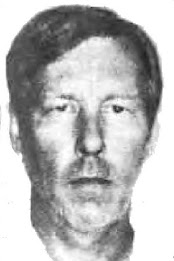
Joseph Helmich – The KL-7 for Cash Spy Case

Joseph George Helmich

The well known John Walker spy case from 1985 was covered extensively by the press. In 1968 he sold the technical details of the TSEC/KL-47 crypto machine (Navy version of the KL-7) to the Soviets and provided them more than 17 years the secret key sheets, causing tremendous damage to U.S. Naval communications. However, he was not the first to do so.

Joseph Helmich already compromised the KL-7 five years earlier, but his case is hardly known to the public. Both Walker and Helmich were only caught after 17 years, but textbook spy candidat Helmich could have been caught much sooner.

Career in Signals 

Joseph Helmich (°1937 ✝2002) entered the U.S. Army in 1954. After Signal School training he served two years in Korea. In 1958 he received a Top Secret clearance at the Signal Training Center in Fort Gordon.

Later that year he served at the U.S. Communications Zone Europe in Orleans, France and from 1959 until 1963 in the 275th Signal Company in Paris. Meanwhile, he was appointed Warrant Officer, now had Top Secret clearance and worked as custodian for classified cryptologic documents.

While in Paris, Helmich got into financial trouble and wrote some bad checks. To avoid court-martial and solve his debts he contacted the Soviet embassy and offered to sell classified information. He met with a Soviet agent, working undercover at the Soviet Trade Mission in Paris and received instructions in espionage tradecraft. He provided the Soviets with the repair manuals of the KL-7, the secret internal wiring of its rotor and the secret daily key lists.

Keys for Cash 

Helmich moved in 1964 to Fort Bragg and served in a signal battalion. He made several trips to Paris to meet his handler, a GRU Soviet Military Intelligence officer. Each time, he provided copies of key lists  from the KL-7, at that time the most used crypto machine by U.S. troops in Vietnam and by many of their allies. He was paid at least $131,000 but he was going to be sent to Vietnam soon.


Meanwhile, Helmich owned his own home and two jaguar cars, quite unusual for a 28 year old of his rank. This triggered an investigation and he explained that his wealth came from an investment in France and gambling. Both claims proved unverifiable and he refused a polygraph examination. As a result, his Vietnam assignment with the Army Security Agency (ASA), a unit responsible for communications security, was turned down. Instead, he was sent to a supply unit in Vietnam.

After returning from Vietnam, his security clearance was revoked due to serious financial problems. He decided to quite the Army, rather than being discharged, and got work as a car sales man. It seemed as they would never discover his betrayal…

Connecting the Dots

In 1974 the FBI received information from a well-placed source that someone with the codename “Greenwood” worked for the GRU. The unidentified person had served in France, had experience in radio interception, served from late 1964 a year in Vietnam and then quit the Army, although still ten years to go. This was the start of FBI counterintelligence operation "Hookshot" to identify the spy. They informed U.S Army Intelligence and Security Command INSCOM to investigate who could fit that profile.

INSCOM reported that Joseph Helmich perfectly fit that profile and the FBI started an extensive investigation with surveillance, all in utmost secrecy to avoid alarming Helmich. His telephone records, jobs, earnings and bank accounts were checked and they discovered several inconsistencies. He had earned $3,000 in three months ($18,000 in present 2022), way more than his wage as a car salesman. He was kept under surveillance for six years.

In 1980 it seemed that Helmich’s life went from poor to rich and back to poor. He now lived near Fort Gordon with its SIGINT training facility and the Charleston Navy nuclear submarine base, two sensitive locations. The FBI suspected that he might still have contact with Soviet intelligence.

New Contact and Arrest

From early on, the Soviets had deposited each of his payments in Switzerland. End of May 1980 Helmich traveled to Canada and visited the Soviet embassy in Ottawa to inquire about getting some of that money. He was told to go to Paris. The FBI however was on his tail and aware of the Soviet embassy visit. Helmich, at the time unemployed, returned to the United States but did not return to his home, had sold all his furniture and his home was for sale. 

It was now time for the FBI to bring in Helmich and debrief him, including polygraph tests. He was interrogated extensively in the following year and was also caught trying to deceit the FBI. Helmich was arrested in July 1981 and indicted on four counts of espionage.

Two months later he eventually pleaded guilty to conspiracy to commit espionage by giving the Russians a maintenance manual, technical details and key lists for the KL-7 crypto system. The government dropped three other counts under a plea agreement. He was sentenced to life imprisonment. In 2002, Joseph Helmich died in prison at the age of 65.

Clear Signs and Warnings 

This was a textbook spy case that could have been avoided. People with security clearance who can't handle money are always a risk because money is an important incentive to espionage. If such person nevertheless gets affluent, has no provable explanation and refuses a polygraph, then all bells should ring. You can either help to solve their problems or prevent access to classified information.

It's only due to a combination of circumstances that Helmich was thoroughly investigated. The source who tipped off the FBI, the criteria only fitted Helmich, records showed both wealth and debts, and his refusal of a polygraph. FBI counterintelligence then put its teeth in the case and had the patience to wait until he made a mistake. He did, and was caught. In the end, he paid dearly for having trivial financial problems and then solving them the wrong way.

Some newspapers reported that the FBI "stumbled" on Helmich when a Soviet KGB agent they were trailing met with Helmich to discuss a payment, "according to an American intelligence source". This was obviously a cover story to protect the well-placed source inside Soviet intelligence. Disclosing that information could have enabled Soviet counterintelligence to identify the mole.

Intelligence Documents

More Information on the KL-7

  • TSEC/KL-7 ADONIS & POLLUX Detailed page with all technical details and the full history of the KL-7, its use by the U.S military, CIA, FBI, NATO and other allies, including many declassified documents.
 New York Times Press Releases

More on This blog